

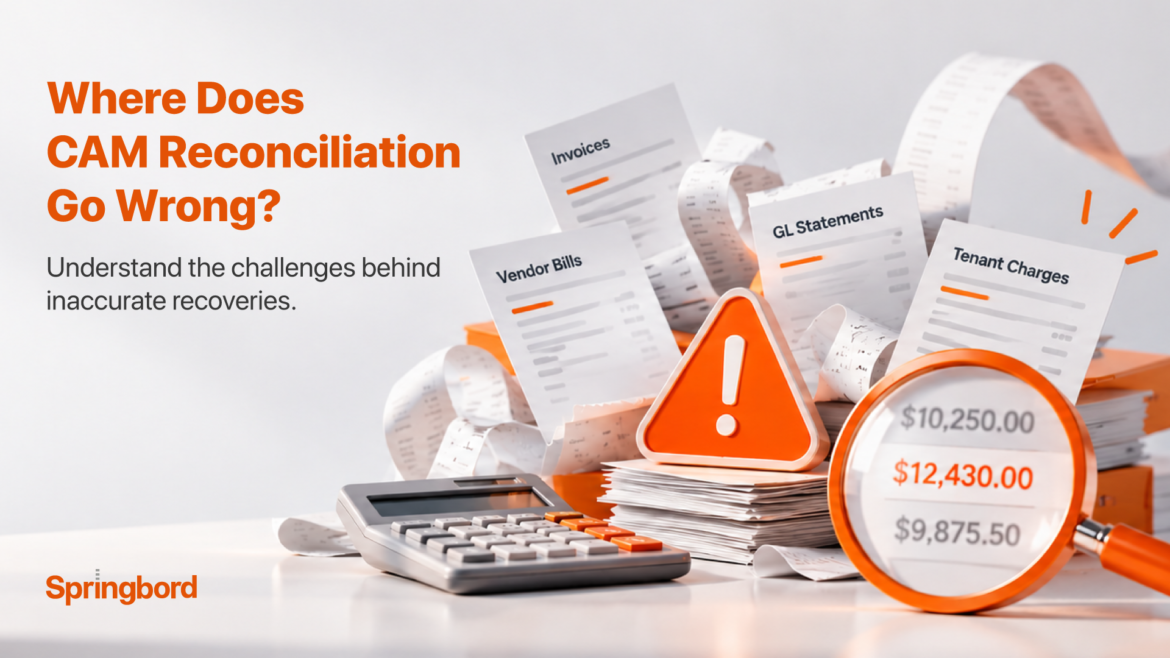

Key Takeaways ✓ Most common challenges: The most common CAM reconciliation challenges are incomplete expense data, lease discrepancies, tenant billing issues, incorrect recoveries, gross-up errors, manual spreadsheets, missed deadlines, and limited staff capacity. ✓ Four layers: These eight problems fall into four layers: Data, Lease, Billing, and Capacity. Fixing the right layer is faster than
Financial reporting errors in multi-property portfolios typically manifest as inconsistencies in the general ledger, misallocated intercompany transactions, and errors in Common Area Maintenance (CAM) reconciliations. These inaccuracies distort Net Operating Income (NOI) and obscure asset-level performance. Resolving these issues requires a standardized chart-of-accounts mapping, automated multi-entity consolidation, and strict audit protocols. Implementing scalable real estate
Many commercial real estate owners focus heavily on occupancy levels and rental income when evaluating Net Operating Income (NOI). However, an often overlooked factor that significantly affects NOI is the accuracy of Common Area Maintenance (CAM) reconciliation. When operating expenses are not properly aligned with lease clauses, property owners may fail to recover legitimate costs
The Common Area Maintenance (CAM) reconciliation process for 2026 involves verifying and adjusting tenant billings for actual operating expenses incurred for shared property areas, ensuring accuracy and fairness in lease agreements. This process is critical for maintaining positive landlord-tenant relationships, preventing financial disputes, and reducing audit risks. Common errors can arise from miscategorized expenses, incorrect