

 Read time 4 min
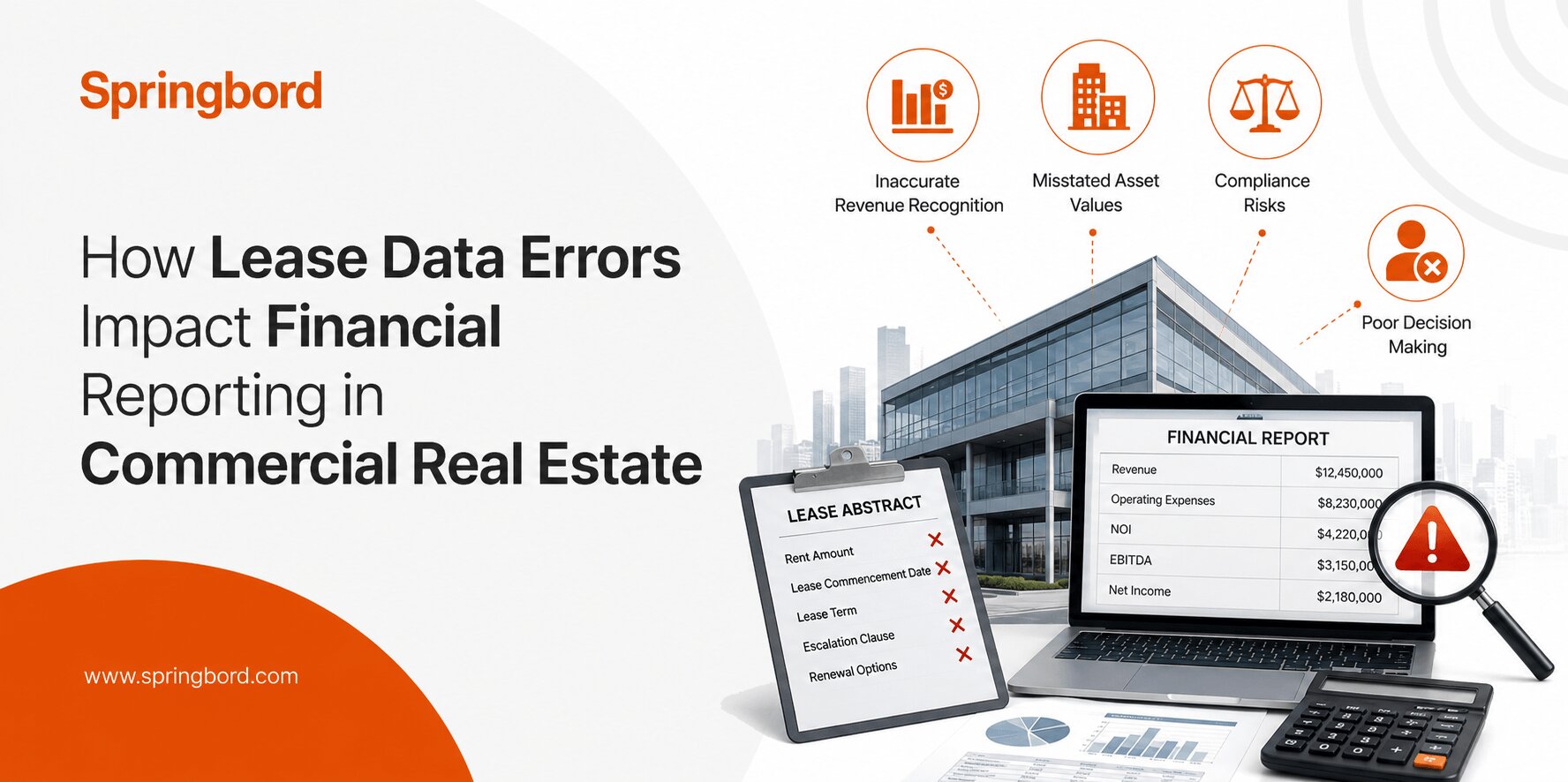
Accurate lease data is the backbone of sound financial reporting in commercial real estate. When this data is flawed, it can lead to significant distortions in key financial metrics such as Net Operating Income (NOI), affecting property valuations and investment decisions.
Structured lease abstraction is a process that helps convert complex lease documents into clear, standardized financial data, significantly reducing errors and potentially recovering lost revenue from missed escalations. Lease data errors in commercial real estate portfolios can manifest in several ways: masking unbilled charges, miscalculating rent increases, and having incorrect lease expiration dates. Addressing these issues requires a robust system to validate data against your core financial systems.
How Do Lease Data Inaccuracies Distort Net Operating Income?
Inaccurate lease data can systematically undermine a property’s true valuation by creating a gap between expected revenue and actual cash flow. Manual data entry, often used in traditional methods, can lead to misinterpretations of complex lease clauses. These clauses, such as co-tenancy agreements or specific rent thresholds, are crucial for accurate financial calculations. Lease abstraction errors can result in missed opportunities for rent increases and delayed lease renewals. Without a reliable flow of validated data into your accounting system, the financial reports you receive may not accurately reflect the property’s performance, leading to ongoing revenue leakage throughout the lease lifecycle.
Structured Abstraction vs. Manual Data Entry: A Clear Difference
When managing lease data for multiple properties, it’s important to understand the difference between automated, structured abstraction and traditional manual data entry. Structured abstraction uses advanced methods to ensure accuracy and efficiency, while manual entry is more error-prone and slower.
| Aspect | Structured Lease Abstraction | Traditional Manual Entry |
| Accuracy Process | Automated checks combined with human review | Individual review, prone to human error |
| Financial Reporting Accuracy | Very high accuracy, minimizing discrepancies | Can have significant variances and transcription errors |
| Speed | Faster, especially for complex documents | Slower, can be delayed by internal workloads |
| System Integration | Designed for easy integration with accounting systems | Often results in data being stored in separate systems |
Ensuring Lease Data Quality Before Financial Reporting
To achieve reliable financial reporting, it’s essential to have a process in place to check the quality and accuracy of lease data before it’s integrated into your systems. This involves rigorous checks on key lease clauses and dates.
- Checking Financial Clauses: Compare the abstracted rent schedule against the original lease. Significant differences signal a need for a full manual review of that lease before updating your financial records.
- Verifying Critical Dates: Ensure that important dates, such as lease expirations and renewal options, are accurately recorded. Missing or incorrect dates can lead to significant risks.
- Validating Expense Allocations: Double-check how common-area maintenance (CAM) charges are allocated among tenants. Errors here can lead to over- or undercharging, impacting both tenant relations and revenue.
- Confirming System Synchronization: Ensure data transfers smoothly into your accounting system without errors during integration.
Considerations for Outsourced Lease Abstraction
If you’re considering outsourcing your lease abstraction, there are a few key factors to keep in mind:
- Your internal property management software should support easy data import and export for seamless integration.
- Outsourcing is generally most cost-effective for portfolios with a significant number of active leases (often 50 or more).
- Having all historical lease documents, including any amendments, is crucial for accurate abstraction. Missing documents can hinder the process.
- Your internal team may still need to review and interpret complex legal points that go beyond standard data extraction.
How Centralized Data Validation Solves Multi-Property Issues
Working with specialized real estate accounting services can create a single, reliable source of truth for managing your entire portfolio. Companies like Springbord use thorough quality assurance processes to extract, verify, and standardize lease data across different systems. This centralized approach provides asset managers with dependable data, leading to more accurate financial forecasts, fewer disputes over expenses, and better compliance with lease agreements.
Springbord specializes in transforming complex lease data into actionable insights for commercial real estate professionals. By leveraging advanced technology and expert analysis, they ensure that financial reporting is based on accurate, up-to-date information, thereby minimizing errors and maximizing revenue recovery. Their commitment to quality assurance and seamless integration with existing systems makes us a valuable partner for property managers and asset managers looking to enhance their financial operations.
Frequently Asked Questions About Lease Data Accuracy
How does structured lease abstraction integrate with property accounting systems?
Structured abstraction processes can export validated lease data directly into common accounting platforms like Yardi or MRI. This ensures that financial figures are consistent across your lease data and your accounting ledgers, reducing errors.
What is the typical return on investment for fixing lease accounting errors?
Many commercial real estate portfolios see a positive return on investment within 3 to 6 months after implementing better data validation. Recovering even a single missed rent increase or correcting an expense charge can often offset the cost of abstracting numerous leases.
How do providers handle missing lease addenda?
Providers typically have a system for cataloging all available documents. If there are gaps in the lease history, they will flag these missing amendments for the property manager to locate before the abstraction process can be completed accurately.
Why do lease data errors affect common area maintenance (CAM) reconciliation?
Accurate CAM reconciliation depends on correctly calculating tenant expense shares and applying any relevant caps mentioned in the lease. If this data is incorrect due to abstraction errors, landlords might overcharge tenants, leading to disputes, or undercharge, resulting in lost revenue.
What are the limits of using only automated lease data extraction tools?
Automated tools can sometimes struggle with unique legal language, complex agreements, or handwritten notes in lease documents. Human review is often necessary to interpret these nuances and ensure that the data meets the high-accuracy standards required for real estate accounting.