

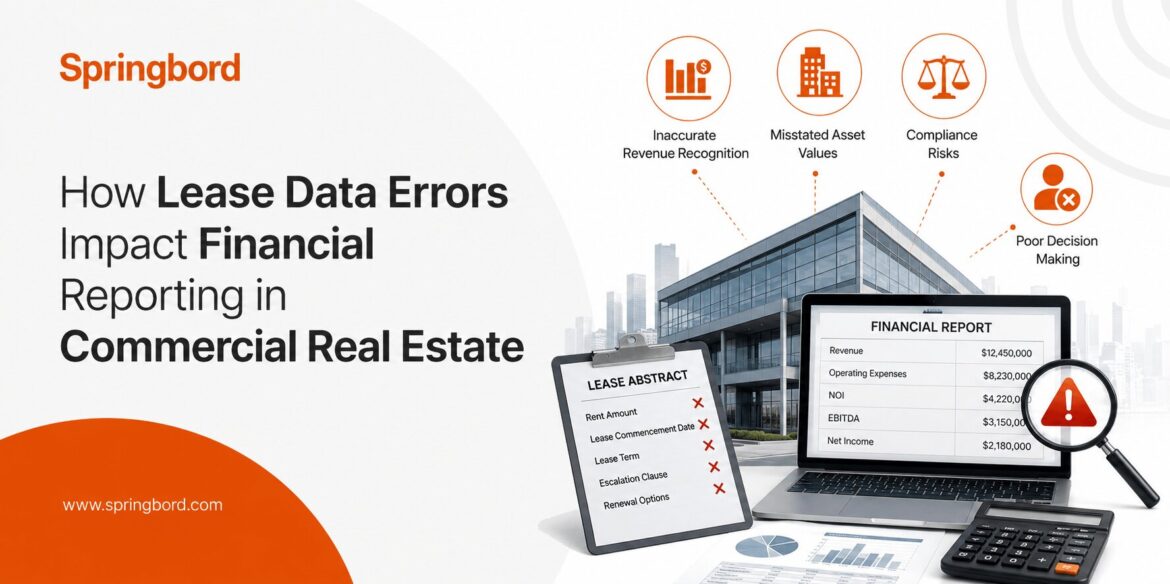

Accurate lease data is the backbone of sound financial reporting in commercial real estate. When this data is flawed, it can lead to significant distortions in key financial metrics such as Net Operating Income (NOI), affecting property valuations and investment decisions. Structured lease abstraction is a process that helps convert complex lease documents into clear,

Gaining clear visibility into your multi-property Commercial Real Estate (CRE) portfolio is paramount for strategic decision-making and financial health. Centralized lease abstracting and data management platforms are indispensable for consolidating all critical lease information into a single, easily navigable system. This is especially vital for owners managing numerous properties, as it enables precise tracking of
Lease data sits at the core of every commercial real estate decision. From rent collection and lease renewals to compliance and portfolio strategy, everything depends on accurate, accessible information. Yet, across the industry, lease data inaccuracies remain a persistent issue that quietly impacts revenue and efficiency. These inaccuracies are rarely obvious at first. They show
Portfolio performance in commercial real estate is often judged by numbers such as occupancy rates, net operating income, and lease maturity timelines. But behind all these metrics lies a single, critical input that determines their reliability: lease data. Accurate lease data is not just about record-keeping. It directly shapes how portfolios are managed, how risks
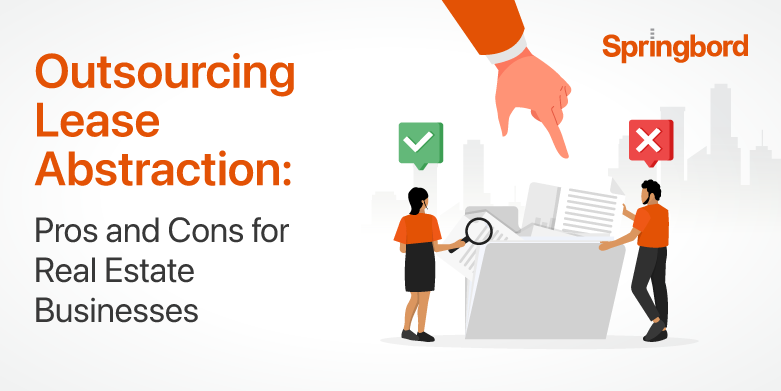

Lease abstraction is vital in real estate management, condensing key information from complex lease agreements for property owners and managers. Every clause shapes a property’s financial and operational landscape, influencing profitability and strategy. From rental rates to maintenance responsibilities, lease intricacies impact decision-making. Despite its importance, real estate businesses often face challenges due to the

Introduction: The Lease Abstraction Dilemma Lease abstraction is no longer a back-office function, it’s a critical part of property and lease portfolio management. But as portfolios grow and compliance tightens, many organizations are left wondering: Should we invest in a lease abstraction tool or outsource the process to experienced professionals? In this article, we walk
In today’s data-driven real estate environment, businesses face increasing pressure to act fast and make informed decisions. With lease documents being long, complex, and filled with legal jargon, having a simplified view can be a game-changer. We all live in a fast-paced world where we would expect everything to happen instantly or get things done

The telecom industry is evolving at an unprecedented speed. This continuous disruption underpinned by network upgrades, technology innovations, and ever escalating demand for data is putting telecom companies under immense pressure to keep pace in order to meet new market demands. To manage these challenges effectively, many telecom companies are turning to professional lease abstraction

As commercial lease portfolios grow in size and complexity, managing lease data accurately has become a top priority for real estate businesses. Why Lease Abstraction Matters – and Why It’s Challenging Real estate companies are increasingly adopting the process of lease abstraction that allows them to summarize essential business, legal and financial terms and conditions.


As the global business landscape becomes more complex and competitive, organizations are seeking innovative ways to streamline operations and maximize efficiency. One area where businesses can significantly reduce costs and boost productivity is through outsourcing lease abstraction services. Lease abstraction services involve the extraction of important information from lease documents, such as rent amount, lease