


A commercial lease can run 60, 80, even 150 pages once you count the original agreement, every amendment, every side letter, and every exhibit. Buried in that stack are the numbers your finance, asset management, and legal teams rely on every day: rent escalations, CAM caps, renewal windows, termination triggers. When those numbers are wrong
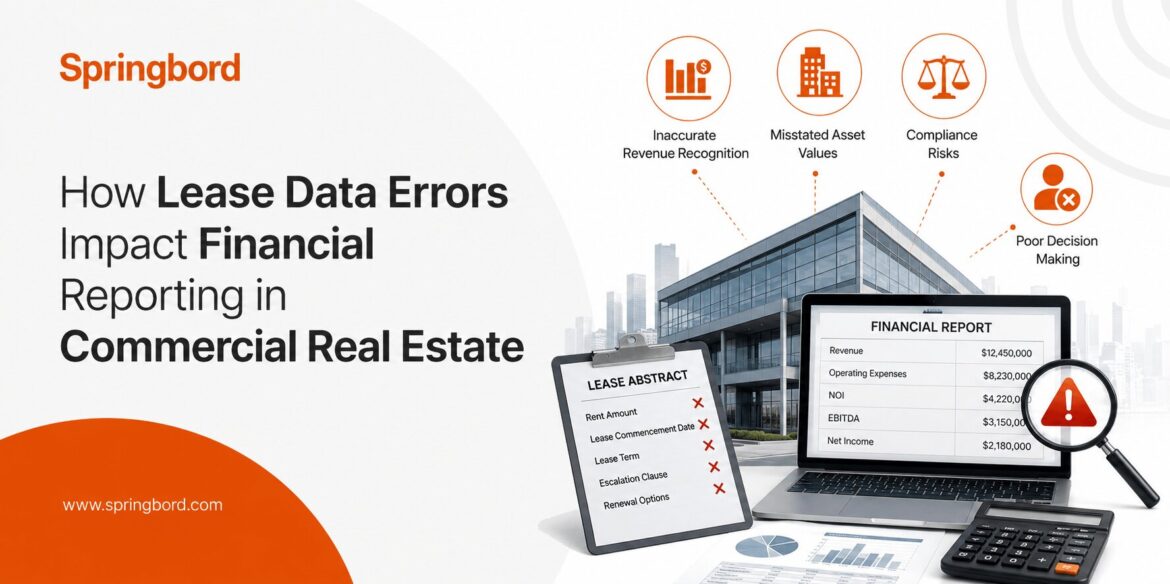
Accurate lease data is the backbone of sound financial reporting in commercial real estate. When this data is flawed, it can lead to significant distortions in key financial metrics such as Net Operating Income (NOI), affecting property valuations and investment decisions. Structured lease abstraction is a process that helps convert complex lease documents into clear,

Gaining clear visibility into your multi-property Commercial Real Estate (CRE) portfolio is paramount for strategic decision-making and financial health. Centralized lease abstracting and data management platforms are indispensable for consolidating all critical lease information into a single, easily navigable system. This is especially vital for owners managing numerous properties, as it enables precise tracking of
Lease data sits at the core of every commercial real estate decision. From rent collection and lease renewals to compliance and portfolio strategy, everything depends on accurate, accessible information. Yet, across the industry, lease data inaccuracies remain a persistent issue that quietly impacts revenue and efficiency. These inaccuracies are rarely obvious at first. They show

Portfolio performance in commercial real estate is often judged by numbers such as occupancy rates, net operating income, and lease maturity timelines. But behind all these metrics lies a single, critical input that determines their reliability: lease data. Accurate lease data is not just about record-keeping. It directly shapes how portfolios are managed, how risks
Lease documents contain critical financial and operational details, yet this information often remains locked inside lengthy legal agreements. When teams rely on manual reviews or scattered records, important dates, costs, and obligations can easily be missed. Lease abstraction simplifies this challenge by converting complex lease language into clear, structured portfolio data. It gives finance and

In commercial real estate, information governs almost every decision you make. Whether you are managing a large property portfolio, tracking tenant obligations, preparing financial statements or planning renewals, accurate lease data is at the center of it all. This is where Lease Abstraction Services, or LAS, play an important role. A well-structured abstraction process converts

Lease abstraction is vital in real estate management, condensing key information from complex lease agreements for property owners and managers. Every clause shapes a property’s financial and operational landscape, influencing profitability and strategy. From rental rates to maintenance responsibilities, lease intricacies impact decision-making. Despite its importance, real estate businesses often face challenges due to the
Introduction Lease administration today plays a pivotal role in financial reporting, compliance, and portfolio strategy. Yet even with improvements in lease technology and pressure from rules like ASC 842 and IFRS 16, many companies still use scattered data, manual tracking, and old methods, putting them at risk for serious financial and compliance issues. According to

Introduction: Why ASC 842 and Lease Abstraction Matter Lease accounting standards are reshaping how businesses record leases, making accurate, timely lease abstraction more critical than ever. ASC 842 requires detailed lease data to be reported on the balance sheet, and the process of extracting and organizing this information can be a significant operational challenge, especially