


One of the toughest processes to deal with in real estate is CAM reconciliation. Many owners and landlords struggle with their annual reconciliation. This is because of the intricacies involved, poor tracking of expenses, and the variation in the payment that we see every year. Common Area Maintenance is essential for owners, and missing this


As a property owner or manager, you know that keeping track of all the costs associated with your property can be a daunting task. From rent payments to utility bills, it can be difficult to keep everything organized and ensure that all expenses are accounted for. That’s where a CAM Reconciliation Statement comes in. A
In real estate management, Commercial Common Area Maintenance (CAM) reconciliation stands as a pivotal process. It’s the mechanism through which landlords recover expenses incurred in maintaining shared spaces within commercial properties. While seemingly straightforward, CAM reconciliation poses significant challenges for real estate business owners, necessitating a closer look at its complexities and implications. At Springbord,
In commercial real estate management, achieving the highest possible return on investment (ROI) is a top priority. A critical aspect of this endeavor involves managing Common Area Maintenance (CAM) costs effectively. Common area maintenance reconciliation, when executed strategically, can significantly impact your property’s financial performance. In this blog, we will delve into effective CAM reconciliation
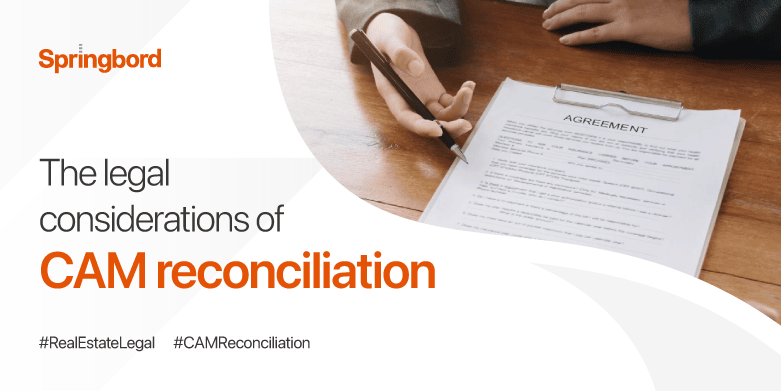
Legal considerations of CAM reconciliation are of the utmost importance in commercial property management. Common Area Maintenance (CAM) reconciliation refers to balancing expenses between proprietors and tenants for shared property areas. To ensure impartiality, transparency, and compliance with lease agreements, it is vital to comprehend and adhere to the legal aspects governing this reconciliation process.
The reconciliation of CAM expenses is crucial to the financial landscape of commercial properties. The impact of CAM reconciliation on property value must be balanced. CAM reconciliation, the process of balancing common area maintenance charges, has the potential to have a significant impact on a property’s value. Property owners, investors, and tenants must understand CAM
CAM (Common Area Maintenance) reconciliation is an important process for commercial property landlords and tenants to understand. It involves comparing the actual expenses incurred for maintaining and operating a property during a specific period, known as the “current year,” to the expenses that were budgeted for that period, known as the “base year.” The difference
Common area maintenance (CAM) reconciliation is one of the most critical tasks of commercial lease administration, which if not done correctly can result in significant losses. CAM reconciliation is a complex, tedious, and time-consuming activity and your team is under constant pressure to get it done accurately and in a timely. This makes the process
Common area maintenance (CAM) expenses are operating expenses that are shared by the tenants on a pro rata basis. CAM charges are not standard expenses, they vary greatly depending on various factors, because of this CAM reconciliation has emerged to be one of the most tedious and complex processes. Despite landlords/property managers efforts to simplify
Common area maintenance (CAM) expenses are a standard and key part of any commercial lease that helps cover the operating expenses These charges are calculated on a pro-rata basis and passed on to the tenants. That said, despite its importance in the upkeep of a property, the lack of a unified template for reconciling CAM
- 1
- 2